
Himachal Pradesh is one of the most preferred mountain destinations in India and its valleys, forests, rivers, snow covered mountains and beautiful towns have attracted tourists. Each part, be it Shimla and Manali, Dharamshala, Dalhousie, Kinnaur, Lahaul-Spiti and remote villages, is a dissimilar travelling experience.
However, when visiting the mountains there are more arrangements that are made than when visiting the city on vacation. The weather is unpredictable, the roads can be damaged by rainfall, snowfalls or landslides and the cell phone connection in rural areas can be poor. One can make a journey less uncomfortable and safe by understanding how to respond to such situations.
This Himachal Pradesh tourist safety guide entails simple safety precautions, emergency contact, road safety, governmental resources and tips and tricks which tourists are likely to familiarize themselves with before travelling within the state.
👉 Planning a mountain trip? Explore our customized [Complete Himachal Tour Packages] featuring experienced mountain drivers, verified stays, and 24/7 travel support.
1. Complete Safety Checks Before Your Journey
Always pay attention to the weather forecast of your destination before travelling and also read the latest road and local travel advisories. It is possible that the conditions differ significantly across Himachal Pradesh, and it is not wise to expect that the weather or road conditions in one town will be similar in another.
Have your identification details, hotel bookings, transport details and emergency contacts readily available. Store valuable data on your phone and have a copy of it in a printed form wherever possible.
Travellers going to remote locations or high-altitude areas should also look into the existence of special permits, vehicle restrictions or seasonal restrictions on the route to be taken.
If you plan to visit multiple destinations in one trip, booking a customized [Himachal Tour Package] ensures that your accommodation, transportation, and flexible itinerary are completely taken care of.
2. Keep Emergency Numbers Before Travelling
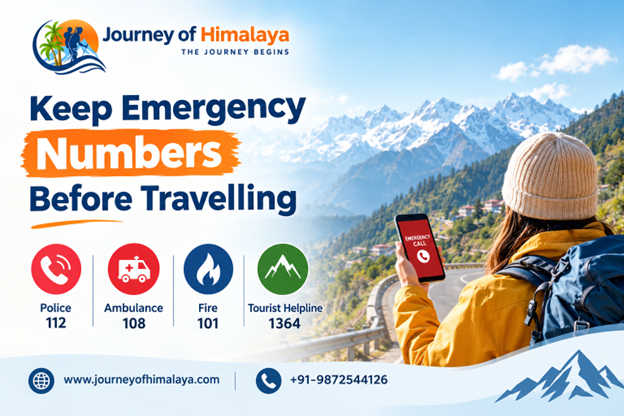
One of the easiest precautions that travellers can observe includes saving contacts of the emergency before heading to the hills. Police, fire and medical emergencies may be called on the national emergency number 112.
Additional significant figures are police at 100, ambulance services at 102,108 and fire services at 101. Disaster-management support can be reached via 1070 and 1077, the latter being offered to the disaster control rooms on a district level.
Important emergency contacts:
| Service | Number |
| Emergency Response | 112 |
| Police | 100 |
| Ambulance/Medical | 102 / 108 |
| Fire | 101 |
| State Disaster Management | 1070 |
| District Disaster Management | 1077 |
| National Tourist Helpline | 1363 / 1800-11-1363 |
Note: Emergency contact details may be updated by government authorities. Travellers are advised to reconfirm these numbers before departing.
3. Disaster-Management Assistance and Tourist Helpline
The National Tourist Assistance Service can be found to assist travellers with information and when they are in challenging circumstances. Travellers in Himachal Pradesh can contact the National Tourist Helpline on 1363 or 1800-11-1363 for information and assistance.
In the case of landslides, extreme weather, any form of road blockage or other natural hazards, travellers must use the official information on disaster-management and directions issued by local authorities.
Before starting the journey, save these Himachal emergency numbers in your phone. They can also be handy to write down or take a screenshot since one cannot always be connected to the internet in remote places.
4. Precheck Road Conditions
Mountain roads may be influenced by rain, snow, landslides, falling rocks, road works and traffic jams. A road that was open earlier in the day may become challenging or even temporarily closed due to a sudden change in the weather.
Official government departments, district administration, police advisories and other local sources are reliable sources of information that can be used to check the latest Himachal Road condition updates before embarking on a long road journey.
Never put your trust on old social-media posts or information left by other travellers. When the authorities have shut down a route, do not go past barriers, or make an unsanctioned detour.
👉 Visiting higher altitudes or Manali in winter? read our detailed [Manali Winter & Snow Locations Guide] for updated route-planning information.
5. What to Do in the Case of Heavy Rain, Landslides or Even a Snowfall
During heavy rains, there may be a high possibility of landslides, falling rocks, and immediate alterations in road conditions. During heavy rain, avoid parking below steep or unstable slopes, cliffs and areas with falling rocks.
Always avoid parking near rivers, streams or low-lying places when water levels are high. A dry looking water channel may be hazardous in the case of heavy rain.
The snow may cause slippery roads and low visibility. Bring along appropriate winter attire and do not travel unnecessarily when the weather is bad. Should the authorities caution travellers that they need to wait, then heed their instructions instead of attempting to get to the destination at all costs.
Among the Himachal travel safety tips, one of the most significant is to ensure that your itinerary is flexible. An extra day can be used in case of any delay due to weather in means of transport or sightseeing.
👉 Don’t let unpredictable mountain weather ruin your trip! [Request a Free Himachal Package Quote] with transparent inclusions and flexible weather policies.
6. Prepare for Weak Mobile Connectivity
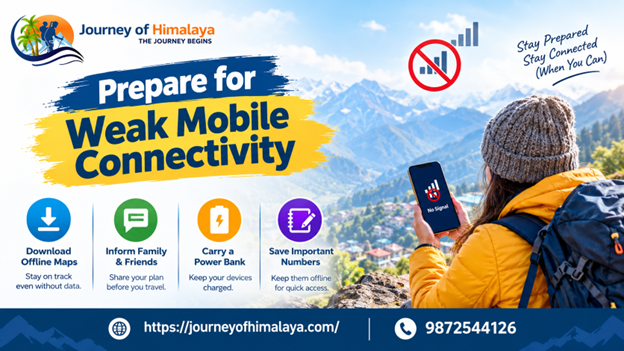
The mobile connectivity is also not as consistent across Himachal Pradesh. Villages and mountainous areas at high altitudes can have patchy or no network coverage.
Never venture into such places without notifying a family member or a friend about the route and the time you are likely to arrive. Get maps offline and have hotel, driver, and emergency contact details.
Bring a mobile phone with a full charge and power bank. When taking long journeys to remote regions, it is advisable to put your phone on power-saving mode when necessary.
Money also comes in handy. Digital payments are the usual thing in major tourist attractions, but minor shops, remote places, or places with weak internet connectivity might not necessarily accept online payments.
7. Share Hotel and Cab Details
Travellers are advised to give the name of the hotel and other booking details, location and transportation to a person you trust.
When you are on your way somewhere far, also include your intended route and time of arrival. This will establish a straightforward communication strategy in case your phone goes out of reach.
When taking a taxi, remember the car number and the contact numbers of the driver. It is advisable to verify the destination, route and charges prior to commencing the journey. Families and individual travellers must be especially keen on ensuring these details are always at hand.
8. Basic High-Altitude Precautions
Travellers who visit high-altitude destinations ought to give time to their bodies to adjust. Do not engage in vigorous exercises soon after a much higher altitude is achieved.
Keep hydrated, wear the best clothes according to the changing weather and get enough sleep. If altitude sickness symptoms develop, stop ascending and tell someone travelling with you. Confusion, poor balance or breathlessness at rest require immediate medical help. Descend to a lower altitude promptly if it is safe to do so.
Bring a basic first-aid kit and important medicines. Before travelling to high-altitude regions, travellers with medical issues should consult qualified medical professionals. You can also refer to official medical guidelines like the NHS Guidance on Altitude Sickness to understand symptoms, prevention, and when to seek urgent medical help.
9. Check Permits and Official Tourism Information
Some destinations and activities might come with certain entry specifications, permits, vehicle prohibitions or seasonal regulations. These requirements may vary based on weather, local regulations and administrative decisions.
Government tourism portals, state government websites and resources of the district administration are critical in providing official Himachal tourism information to the travelling community.
Do not base your research on only what the travel pages, social-media accounts, or ancient blog posts say regarding permits or restrictions when verifying. When rules have been changed, official announcements must be given the first priority.
Transport-related information is also handy to check when travelling by a personal or business vehicle, especially in a route that is subject to permits or constraints.
10. What to Provide in the Case of an Emergency
To seek emergency help, do not give vague information about what or where you want to go.
Try to share:
1. Your physical or approximate whereabouts.
2. Closest village, landmark or kilometre point.
3. Name of the hotel or accommodation.
4. Number of people travelling with you.
5. Type of emergency.
6. Any medical issues or injuries.
7. Vehicle registration number
8. Your last route.
9. An accessible telephone number.
When travelling with a tour operator, it is important to be promptly informed about the situation. Nevertheless, in case of an emergency, call an emergency service at the first instance.
11. Official Resources to Keep Handy
| Resource | Purpose | Contact |
| Emergency Response | Police, medical and other emergencies | 112 |
| Tourist Assistance | Tourist information and support | 1363 / 1800-11-1363 |
| State Disaster Management | Disaster-related assistance | 1070 |
| Himachal Government | Government services and departments | https://himachal.gov.in/ |
| Tourism Department | Tourism-related information | https://himachaltourism.gov.in/ |
| Transport Department | Vehicle and transport information | https://himachal.nic.in/transport/ |
| IMD Shimla | Weather forecasts and warnings | https://mausam.imd.gov.in/shimla/ |
| Shimla District Helplines | Official emergency contacts for Shimla district | https://hpshimla.nic.in/helpline/ |
| Lahaul and Spiti Road Status | Road updates for routes listed by Lahaul and Spiti district | https://hplahaulspiti.nic.in/road-status/ |
Check official contact details and advisories while planning your trip. Recheck weather warnings and road updates before departure.
Conclusion:
Himachal Pradesh is a place of unforgettable experience and mountain travel takes preparation and adaptability. Monitoring weather and road situations, keeping emergency contacts, carrying cash and power banks, leaving accommodation and travel information, and being guided by official instructions can assist travellers to cope better in unforeseen circumstances.
This Himachal Pradesh tourist safety guide may be a handy guide to a traveller who is visiting various parts of the state. Nevertheless, safety data may vary according to the weather and local factors, and it is always recommended to look at the most recent official recommendations prior to beginning your trip.
Finally, a good mountain travel emergency guide must concentrate on preparation, communication and responsible decision-making. In cases where the authorities give advice to travellers to delay, reroute or stop travelling, safety must take centre stage. Travellers planning a trip across the state can book a customized Himachal Tour Package with Journey Of Himalaya to ensure safe transport with experienced mountain drivers, verified accommodations, flexible itineraries, and dedicated on-trip support during weather changes.
👉 Explore our tailor-made Himachal Trip featuring experienced local drivers, curated stays, and 24/7 travel support. [Explore Himachal Tour Packages & Get a Free Quote]