
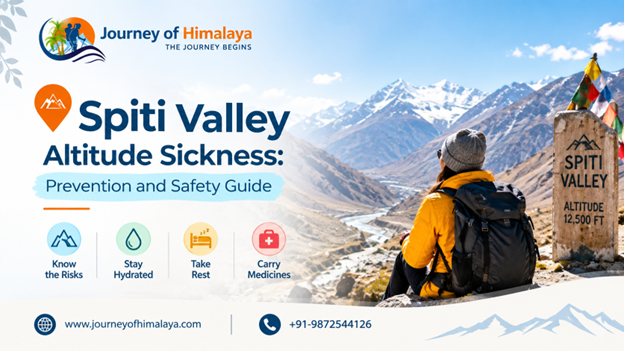
Spiti Valley is the part of Himalayan valley famous for their Buddhist Monasteries, distant Villages like Komic, high hills and pretty landscape. The traveller must be obliged to design the journey because the valley is very much higher than the plains. The necessity to adapt to low oxygen levels may result in the conditions of the altitude sickness in Spiti Valley should the body not have enough time to adjust.
These symptoms may include a headache, fatigue, nausea and vomiting. Planning, gradual ascent and breaks can improve safety. It is interesting to comprehend how you respond to a high altitude.
Why Does Altitude Sickness Occur in Spiti Valley?
As altitude increases, atmospheric pressure decreases and with it every breath contains less and less oxygen. The body may fail to adapt when the travellers undergo a steep rise in altitude.
The issue of altitude illness is no longer a concern of unfit individuals. Healthy and experienced travellers can also develop symptoms. The best action that can be taken as a preventative action is to allow the body time to acclimate.
What Travelers Are More at Risk of Symptoms?
Any person who ascends high altitude rapidly may be affected. Children might not be able to explain symptoms. Parents are expected to observe the kids.
Individuals with medical conditions are advised to visit a doctor prior to travelling. Past visits to the mountains does not always ensure that they would respond in a similar way in the next visit.
How to Be Aware of the Early Symptoms of Altitude Sickness?
The Spiti altitude sickness symptoms may consist of the following: headache, fatigue, dizziness, loss of appetite, nausea and disturbed sleep.
The symptoms should not be overlooked once they occur with elevation. Examine the state and sleep at the existing level. Difficulty in walking, shortness of breath, intense weakness and disorientation, needs medical care.
Manali or Shimla: Which Route Is Better for Acclimatisation?
The Shimla–Kinnaur route offers a more gradual altitude gain, while the Manali–Kaza route reaches high altitude more quickly.
Travellers planning to reach Manali before beginning a separately arranged Spiti journey can review an organised Volvo journey from Delhi to Manali. The onward journey from Manali to Kaza must be arranged and confirmed separately.
The Shimla to Spiti acclimatisation route can be recommended to travellers who have sufficient days to travel at a slower pace. Individuals who select Manali ought to have sufficient rest.
To compare the routes in detail, including the time gap of the trip and computation of itinerary, refer to the Spiti valley route and itinerary guide.
What to Do Before Going to High-Altitude Spiti?
The best place to begin good Spiti Valley acclimatisation is with the realistic itinerary. Do not attempt to visit all attractions in a hurry.
Consume fluids, take small and balanced meals. Eat snacks during long road trips and steer clear of alcohol at first. Prior to taking off, travellers who have encountered altitude issues in the past should discuss preventive measures with a doctor.
What to Do on Your First Day in Kaza?
Relax on the first day in Kaza. Don’t push it to the limit and allow your body time to adapt.
Winding mountain roads may also become a cause of motion sickness. Glancing down at a phone may make it more uncomfortable. Basic high-altitude travel tips for Spiti are to take breaks and look out.
What to Do If Mild Altitude Sickness Symptoms Begin
Mild symptoms must be considered by travellers who are worried about altitude sickness in Spiti Valley. Stop ascending and rest at the current altitude. Do not move to a higher sleeping location while symptoms persist.
If symptoms worsen despite resting, descend to a lower altitude and seek medical assistance.
Travellers can review the official high-altitude travel guidance provided in the CDC Yellow Book. Motion sickness may cause repeated vomiting during hill travel as opposed to altitude, but chronic vomiting can lead to weakness and dehydration.
When Does a Traveller Need Urgent Medical Help?
Severe symptoms will need urgent intervention. Seek emergency services when one experiences confusion, extreme difficulty walking, loss of coordination, excessive drowsiness, and/or extreme difficulty in breathing or a drastic cough.
Extreme cases of altitude sickness may develop quickly. Relocating to low altitude is a crucial emergency action.
How to Choose a Safer and More Comfortable Spiti Itinerary
Select your health, days available and the pace of your travel to the itinerary. The busy schedule does not have much time to rest.
Families are encouraged to enjoy a less hectic pace and simple travel-sickness tips for children. When you feel nausea during a mountain journey, rest, have some air where possible, and do not do anything that aggravates the condition.
Plans should be flexible since weather, roads and health issues can alter the plans.
Planning a Safer Spiti Valley Itinerary
No route fits all the travellers. You only have to think over how many days you have and how fast you want to travel.
A Shimla-Kinnaur gradual route is more appropriate to travellers who want gradual altitude increase. A Manali-Kaza shorter route is appropriate to any restricted timetables but needs a break.
The additional points of interest include a Full Spiti circuit, which takes in larger parts of the valley, and a Chandratal-inclusive itinerary, an additional high-altitude location.
Compare Spiti Valley tour packages to find the right one. Journey Of Himalaya can assist travellers to strike a balance between sightseeing, travel time and rest.
Health and Safety Precautions to a Better Journey
Remember the following precautions:
- Take time to acclimatize after ascending.
2. Do not engage in hard activity upon arrival.
3. Consume fluids frequently and take balanced meals.
4. Avoid alcohol during the initial acclimatisation period.
5. Never keep ascending when the symptoms become worse.
6. Carry only medicines recommended by a qualified doctor.
7. Check weather and road conditions prior to remote trips.
8. Monitor children regarding behaviour or energy.
9. Know where medical assistance is available.
Travellers can be ready with these Spiti Valley health and safety tips.
Conclusion:
Spiti will be explored reasonably and not on a rush schedule. Even healthy travellers who have never been to the mountain can experience altitude sickness in Spiti Valley, a gradual climb, periods of rest and awareness of symptoms are noteworthy.
Choose a route depending on days at your disposal, be flexible and symptom aware. Through reasonable planning, Spiti can be a more comfortable place to visit by the travellers.
FAQs:-
Q1. Is altitude sickness common in Spiti Valley?
Altitude sickness can affect travellers who reach high elevations too quickly without adequate acclimatisation. Individual responses vary, so even healthy and experienced travellers may develop symptoms.
Q2. Which route offers better acclimatisation—the Shimla or Manali route?
The Shimla–Kinnaur route generally offers a more gradual altitude gain. The Manali–Kaza route reaches high altitude faster and requires more careful rest and acclimatisation planning.
Q3. What do travellers eat before a mountain journey?
Before embarking on a mountain adventure, travellers must select a light, familiar food that can be easily digested. Excessively greasy or spicy and heavy foods can cause more discomfort in a long drive. Having a moderate amount and carrying a few snacks can be useful in keeping the energy up without causing the stomach to feel too full.
Q4. Does the use of mobile-phones aggravate motion sickness?
Yes, talking on a cell phone in a moving car can intensify motion sickness. The visual mismatch between visual and inner-ear signals can be worsened by looking closely at the screen as the vehicle turns. Instead, travellers might feel better leaving the phone behind and gazing out of a window at a distant landscape.
Q5. What can parents do to treat travel sickness in children?
Some easy on travel-sickness tips for children are to give them light meals, to get them to look out of the window and not to read, to make them have regular rests on long journeys. Simple snacks and doctor-prescribed medicines should be carried by parents along with water. Discomfort can also be minimized by ensuring children are comfortable and well rested.
Q6. When does altitude sickness require urgent medical assistance?
Seek urgent medical assistance if a traveller experiences confusion, difficulty walking, breathlessness at rest, severe coughing or worsening symptoms. Stop ascending and arrange a safe descent to a lower altitude.