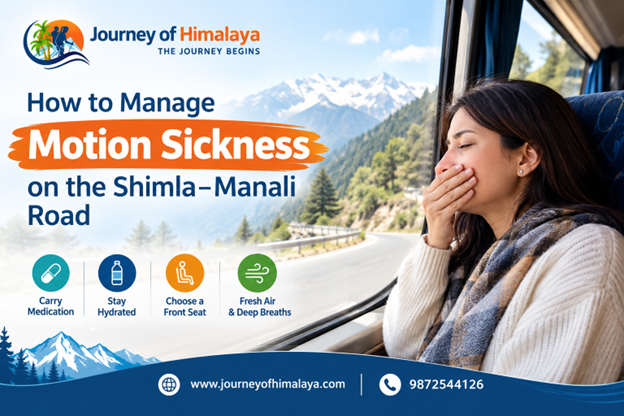
The Himachal Pradesh road trip is an experience of extravagant mountain ranges, forest and memorable views. Preparation can also be used to achieve comfort. As a consequence of motion sickness on Shimla Manali road, one may experience nausea, dizziness, sweating, headache or vomiting. These can make the destination more comfortable as the passengers can be given just preparation, proper sitting, and light food and regular breaks.
What is the Cause of Motion Sickness on Mountain Roads?
Motion sickness is caused when the brain is given different information as relayed by the inner ear and the eyes. The movement and turning can be experienced by the inner ear and the eyes can be on something that is not moving in the car.
This mismatch can result in nausea and dizziness. Reading, watching videos or looking at a phone can worsen the symptoms. Being aware about these triggers can help the travellers prepare before travelling.
Why is the Shimla-Manali Route a tough one?
The Shimla to Manali road journey passes through mountainous terrain with frequent bends, climbs and descents. Road, traffic and weather conditions may also affect travel time. Travellers ought not to have a tight schedule and allow time in case of delays.
The winding road from Shimla to Manali may be hectic to passengers who are sensitive to constant motion. Always carry water, tissues and light snacks and do not move unnecessarily as the car is negotiating turns.
Preparations Before Leaving Shimla
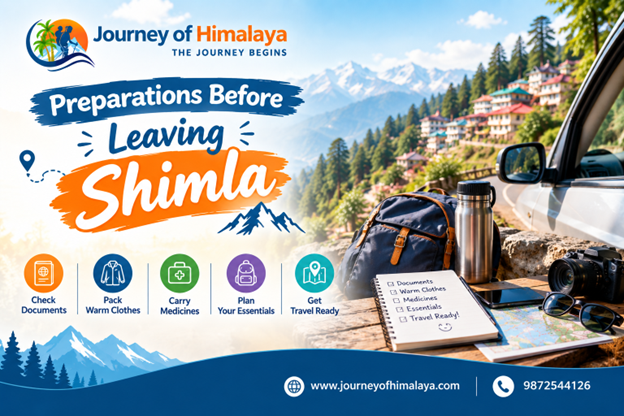
The preparation should begin prior to departure. Have a light, familiar meal rather than something very heavy, greasy or spicy.
And in case of motion sickness, which often happens to you, consult a doctor or pharmacist about appropriate preventive medicine. It is especially essential in the case of children and individuals, who take other medicines.
In case you are asking yourself how to prevent motion sickness in hills, concentrate on simple habits. Choose a comfortable forward-facing seat, look towards the road, avoid screens, keep your head supported and take a safe break if discomfort begins.
Travellers can also review the NHS guidance on motion sickness for general symptoms, prevention measures and treatment options.
Which Seat Is More Comfortable During the Drive?
A forward-facing position with a clear view outside is generally the best seat for mountain road travel. The sight of the road and faraway landscape can assist the eye in keeping pace with motion generated by the inner ear.
When a position is uncomfortable, change seats during a safe stop instead of moving around whilst travelling.
What Can Families Do to Facilitate the Journey?
A Shimla to Manali journey with children requires additional preparation because younger children may not clearly explain nausea or dizziness. Parents should observe sweating, fatigue, irritability, quietness or complaints about feeling unwell.
Bring water, tissues, light snacks, easy-to-wear clothes and backup clothes. Take medicine as instructed by a professional. Ask kids to see what is out there rather than play with a phone or a tablet the whole ride.
When Should Travellers Have Breaks?
No specific break period fits all. It is time-based according to symptoms, traffic, and road conditions, and passenger requirements. If a passenger feels uncomfortable, the driver should stop at the next safe and permitted location rather than follow a rigid break schedule.
Arranging Shimla to Manali rest stops will allow travelers to stretch, take water, and breathe fresh air.
What Should Travellers Avoid During the Drive?
Do not read, play video games, watch videos or stare constantly at a phone when the car is in motion. Close-up activities can augment discomfort.
Some passengers may also find it uncomfortable to take very heavy meals. Travel discomfort should not be treated with alcohol. Rather, sit down, peer out of the window, maintain the head still and breathe gradually.
Making the Journey More Comfortable
Practical planning can start a comfortable hill road journey. Carry water, tissues, easy-to-eat snacks and personal medicines in a convenient bag. Pack commonly used items in such a way that you do not require a search in luggage during movement.
In case nausea sets in, switch off screens and look at the landscape in the distance. An appropriate break in the fresh air can be relaxing. Do not insist on persevering with an activity that evidently exposes you to worsening symptoms.
Journey Of Himalaya may be helpful when a traveller wants a planned holiday. An itinerary can be planned to include transportation, accommodation and sightseeing leaving the flexibility of rest and unexpected delays.
When Should Travellers Seek Medical Advice?
The typical motion sickness cases resolve once the journey is complete. Motion sickness on Shimla Manali road can still need some consideration when there is an acute or long-term case. Consult a doctor when the vomiting persists, when dehydration occurs, when the dizziness is still found after travelling or the symptoms are abnormally severe.
Travel Sickness in Himachal: Some Practical Advice
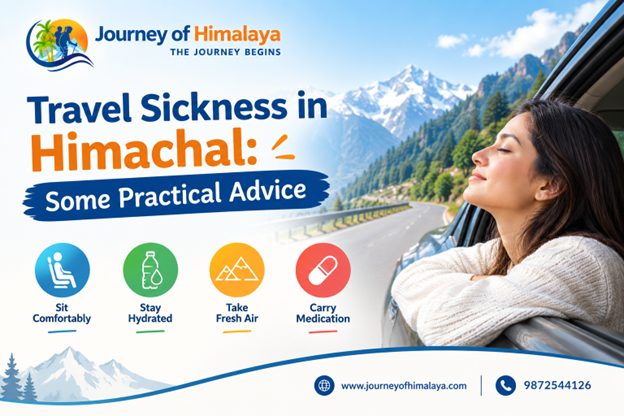
Individuals who are likely to experience these symptoms need to be prepared before experiencing the symptoms. Select an appropriate posture, consume sparingly, minimize screen time and have water available. Families are encouraged to bring more supplies with children and provide time to rest.
Drivers should accelerate, brake and turn smoothly whenever road and traffic conditions permit, while always prioritising safety. Traffic and road conditions as well as weather may influence the time of arrival, and therefore it will be wise not to plan the important events just after arrival to the destination.
Planning a Safer Shimla-Manali Holiday
The optimal plan will be determined by the number of days to be covered, the pace to be taken and personal comfort. In the case of motion sickness on Shimla Manali road, it is easier to manage when travellers take planned breaks.
The Shimla Kullu Manali Tour Package may accommodate those travellers who like a planned holiday.
Conclusion:
Motion sickness on Shimla Manali road can spoil what could have otherwise been a gorgeous Himalayan adventure, although with careful planning the issue can be minimized. Choose a forward-facing seat, eat a light meal, minimise screen time, keep essential supplies accessible and take safe breaks when required.
The travellers are advised to maintain a flexible schedule since weather, traffic and mountain conditions can intervene in the trip. Parents can prepare some additional supplies in case of children, and every person with severe or persistent symptoms ought to consult a professional.
FAQs:
Q1. Is the road between Shimla and Manali very winding?
Yes, there are some bends and curves, as the path is over mountainous ground. The number of windings changes as you go. Movement sensitive travellers would experience more discomfort on curves, particularly on longer continuous stretches of driving in general.
Q2. What is the most comfortable seat when motion sickness is involved?
A forward-facing seat with a clear view of the road is generally more comfortable. Gazing into the road can aid visual data to correlate vehicle movement. Passengers are advised not to read, look down at screens or sit in a position where movement seems particularly intense.
Q3. What must the traveller eat before the journey?
Select a light, familiar food, which is simple to digest, before leaving. Avoid very heavy, greasy or spicy food shortly before or during the journey. Bring water and snacks in case. Moderate eating is also a way of ensuring that the stomach is not too full during the drive.
Q4. How many breaks should families have?
When the passengers are not comfortable and only when it is safe in roads and traffic, families are expected to make stops. No universal interval exists. Frequent breaks will enable all people to stretch, take water and breathe in the air and keep the children more relaxed.
Q5. How long does the Shimla-to-Manali road journey take?
Travel time depends on traffic, weather, road conditions, stops as well as route to be taken. Travellers are advised to leave some time rather than use a specific time. Mountain driving may be more time consuming than anticipated, especially during the rush hours or bad weather.
Q6. What do travellers need to bring to stop motion sickness?
Bring along water, tissues, snacks and easy wear. Carrying medication should be in the form of products that are advised by a healthcare specialist to travellers. When the drive involves several hours, families can include spare clothes and supplies to children.